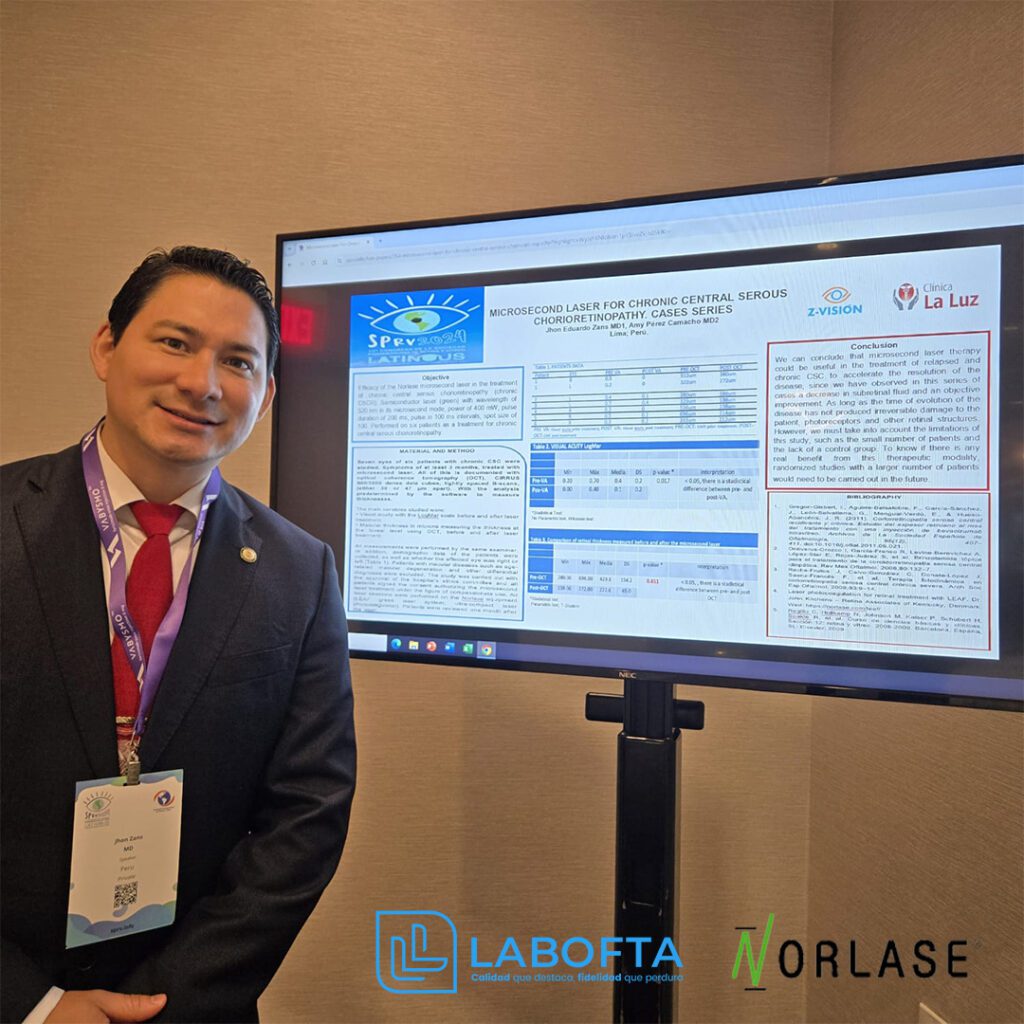
Microsecond Laser for Chronic Central Serous Chorioretinopathy: Case Series

By Dr. Jhon Eduardo Zans
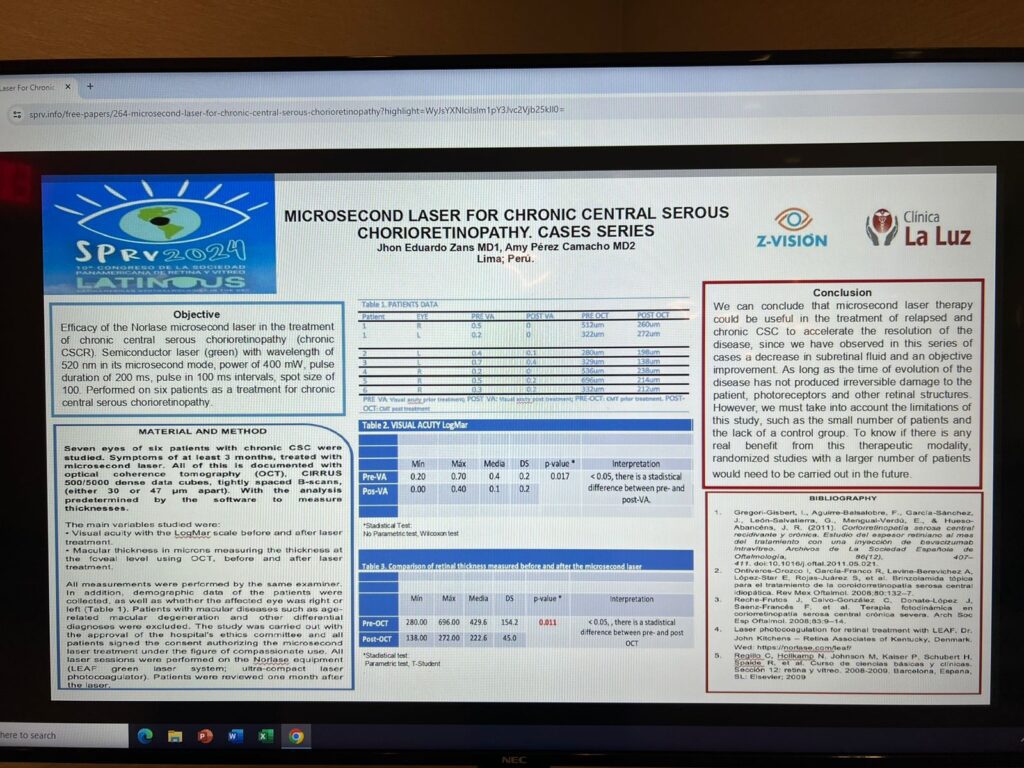
Chronic central serous chorioretinopathy (CSCR) is a challenging condition in ophthalmology, characterized by the accumulation of subretinal fluid that affects central vision. However, a recent study on the Norlase microsecond laser has shown promising and validated results, positioning it as an effective therapeutic option for patients with chronic and recurrent CSCR.
What is the Norlase Microsecond Laser?
The Norlase microsecond laser uses a semiconductor with a green wavelength (520 nm) in microsecond mode, allowing precise and safe treatment of specific areas of the retina. In this study, the laser was applied with a power of 400 mW, a pulse duration of 200 ms, intervals of 100 ms, and a spot size of 100 microns, targeting affected zones.
Proven Effectiveness in Treating Chronic CSCR
The study included six patients with chronic CSCR, treating a total of seven eyes, which were monitored monthly to assess treatment progression. The results showed a significant reduction in subretinal fluid, along with objective improvements in the patients’ vision. This monthly follow-up validated the effectiveness of the microsecond laser in accelerating disease resolution and offering a viable therapeutic alternative in cases of recurrence.
Recognizing Innovation in Ophthalmology
At Labofta, we are proud to congratulate Dr. Jhon Eduardo Zans for his valuable results and the positive impact demonstrated with our Norlase brand in treating chronic CSCR. Norlase technology combines precision and safety, allowing professionals to address complex conditions with an innovative and effective tool that, as seen in this case series, contributes to visual recovery and improves patients’ quality of life.
Conclusion
The Norlase microsecond laser represents a revolutionary and reliable option in ophthalmology, providing advanced solutions for complex retinal conditions. At Labofta, we will continue to support innovation and advancements in ophthalmic technology to always offer the best in visual care.